The old map
Reading a Foot Chart
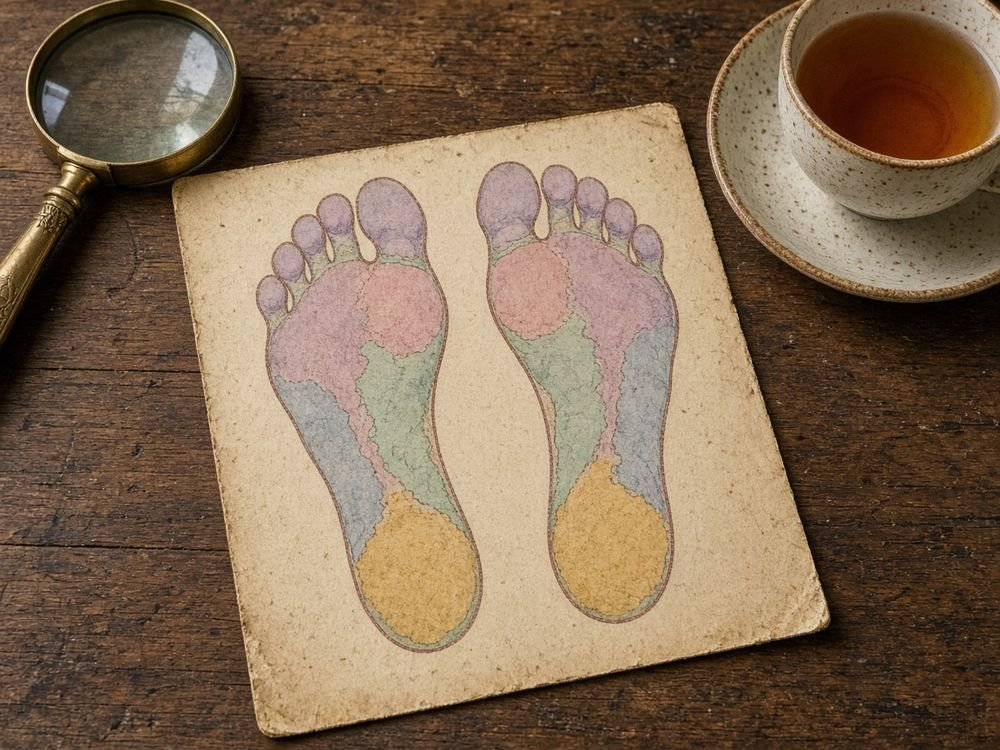
A reflexology chart is a striking object: two soles, coloured in patches and labelled like a map. Here is how practitioners traditionally read one, described as a tradition rather than a medical fact.
Toes, arch and heel
Charts generally treat the foot as a small picture of the body. The toes stand for the head and neck, the ball of the foot for the chest, the arch for the middle of the body and the heel for the lower back and hips. The inside edge of the foot is usually drawn as the spine.
Left and right
The right foot is said to correspond to the right side of the body and the left foot to the left. Organs that sit on one side, such as the liver or the spleen, therefore appear on only one sole.
Why charts disagree
Different teachers and schools have published their own versions, and the positions of some areas vary between them. Studies that asked practitioners to examine the same people did not find that they reliably agreed with each other. That is one reason scientists remain unconvinced.
Reading one as history
Old charts, with their hand colouring and careful lettering, are lovely things to collect and frame. We think they are best enjoyed as a piece of twentieth-century design and folk belief, not as a guide to what is happening inside the body.
If you have pain or changes in your feet, please see a GP or podiatrist rather than consulting a chart.
Next: Everyday Foot Care